

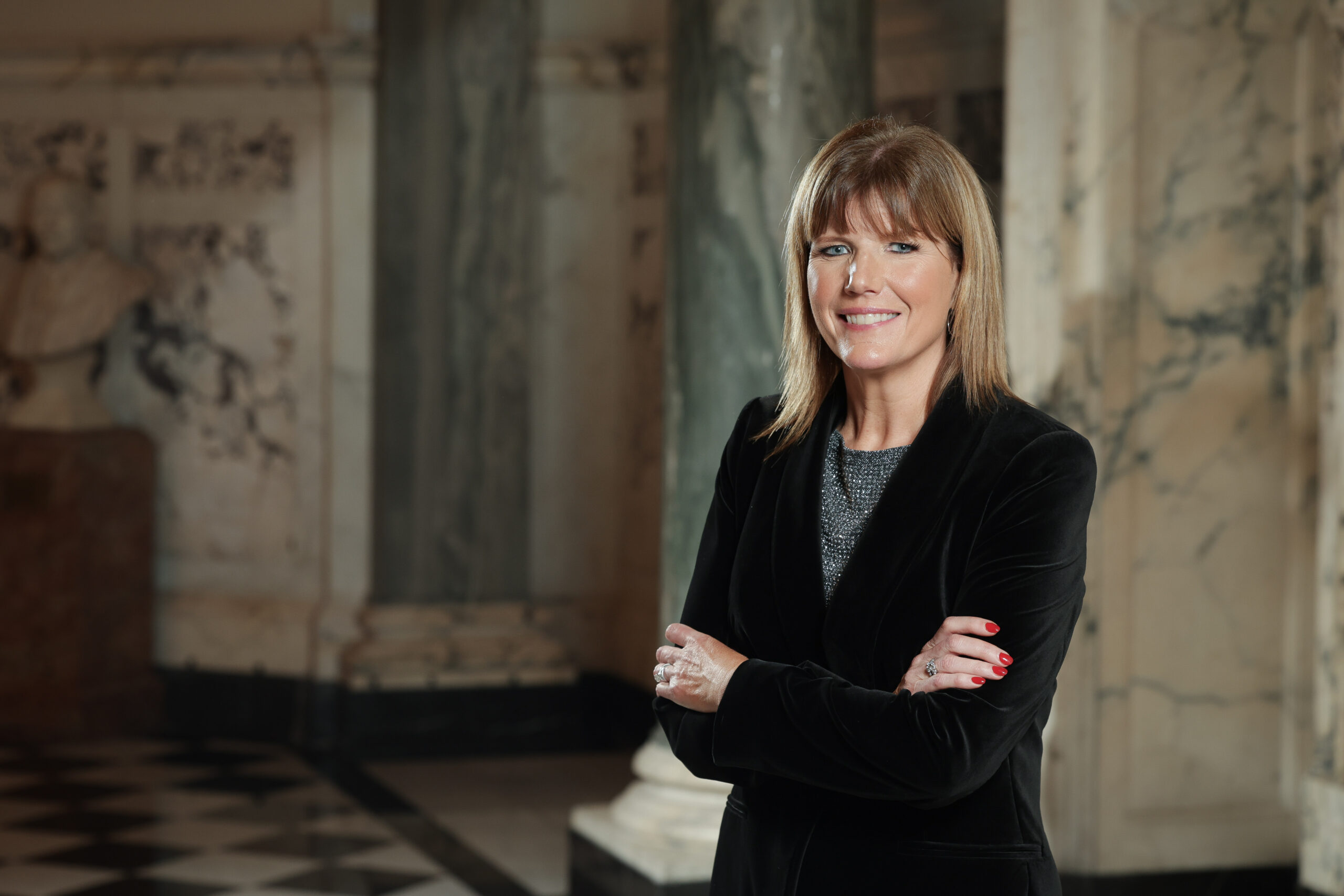
Baroness Sue Gray’s message was clear – Northern Ireland businesses don’t need to wait for change to happen. Instead, they should actively engage with government and help shape the decisions that will determine Northern Ireland’s future.
The former Chief of Staff to Prime Minister Sir Keir Starmer was speaking at Belfast Chamber’s recent Economic Forum, where she challenged the business community to play an active role in influencing political decision-making and shaping the next phase of devolution. It is a challenge that, as the voice of business in the city, resonates with Belfast Chamber – and one that we are helping businesses meet.
Baroness Gray also raised the possibility of exploring elements of the Metro Mayor model in Northern Ireland, with greater local powers and funding to help determine priorities such as infrastructure and skills. Her contribution prompted an important question: how can we make better use of devolution, and what role should business play in shaping the structures, priorities and decisions that will determine our economic future?
The experience of the North East of England, outlined at the Forum by Dr Henry Kippin, Chief Executive of the North East Mayoral Strategic Authority, offered a valuable insight into what can be achieved.
Dr Kippin described how businesses, government, universities and other stakeholders had come together around a shared, long-term vision for the region. This created a clearer focus on priorities including transport, housing, skills and economic growth, while the powers, namely funding and institutional capacity, secured through devolution provided the means to turn ambitions into action.
One example was investment in the region’s transport network, including the Tyne and Wear Metro. Better connections between communities, jobs and homes can help open up employment opportunities, encourage development and contribute to more balanced regional growth. It is a practical illustration of how decisions taken closer to the communities they affect can have a direct bearing on economic performance and people’s everyday lives.
Just as importantly, Dr Kippin emphasised the contribution made by business organisations in securing the North East’s devolution deal. The Chamber of Commerce, CBI, Federation of Small Businesses, Entrepreneurs Forum and other representative groups were instrumental in building the case for change. As he explained, the deal would not have been secured without their involvement.
There are important lessons here for Northern Ireland. We should not assume that structures developed elsewhere can simply be replicated, but we can learn from the principles behind them. A clear economic vision, shaped collectively by business, communities and government, provides a stronger foundation for long-term progress. It also demonstrates that business organisations can do more than represent the views of their members: they can help build consensus, develop practical proposals and influence the direction of policy.
This is where Belfast Chamber is playing an important role. Through our engagement with more than 600 member businesses, government and wider stakeholders, we bring different perspectives together, identify shared priorities and make the case for the decisions and investment needed to realise Northern Ireland’s economic potential.
Government has an equally important responsibility. Meaningful engagement means involving business early in the development of policy, listening to practical experience and being open to ideas that can help address long-standing challenges. It should be a genuine partnership, with both sides contributing to a shared ambition.
Northern Ireland has considerable strengths, from its talented workforce and international trading relationships to the potential of emerging industries and its distinctive position in global markets. But these advantages will not deliver their full potential without ambition, clear priorities and sustained collaboration.
Sue Gray’s challenge was ultimately about making the most of the opportunities available to us. Henry Kippin’s experience demonstrated what can happen when business, government and communities work together with a shared purpose.
We should take both messages seriously. By building on the strength of our business community and giving it a meaningful role in shaping the decisions ahead, we can help create a more ambitious and prosperous future for Northern Ireland.